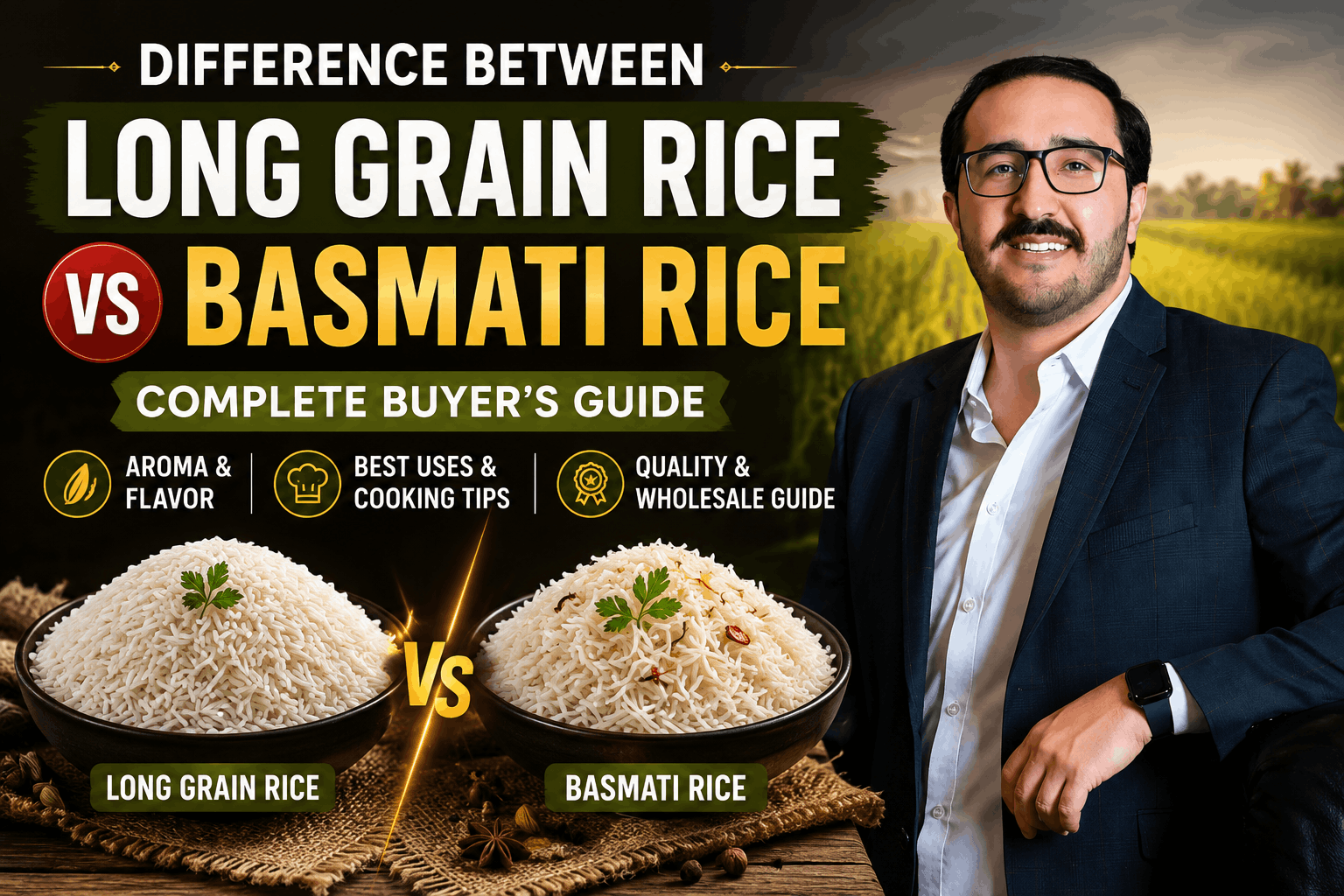
Rice is one of the most widely consumed staple foods in the world, but not all rice varieties deliver the same cooking experience, aroma, texture, or commercial value. For importers, wholesalers, restaurants, retailers, and food service businesses, understanding the difference between long grain rice and basmati is far more than a matter of taste—it directly influences customer satisfaction, menu quality, pricing, and purchasing decisions.
Whether you’re sourcing rice for a five-star hotel in Muscat, stocking supermarket shelves in Oman, or supplying restaurants across the GCC, choosing the right variety helps you meet customer expectations while maintaining consistent quality.
Many buyers assume that long grain rice and basmati rice are interchangeable because both have slender grains and cook into separate, fluffy kernels. While they do share certain characteristics, they differ significantly in aroma, grain length, cooking behavior, nutritional profile, culinary applications, and market value.
Making the right choice begins with understanding these differences in detail.
At Al Marwa Rice, we regularly work with international buyers, distributors, wholesalers, retailers, and hospitality businesses that require reliable supplies of premium Pakistani rice. One of the most common questions we receive from new buyers is whether they should import traditional long grain rice or premium Pakistani basmati rice. The answer depends on several important factors, including the target market, customer preferences, cuisine, and budget.
This comprehensive guide explains everything you need to know, helping you make informed purchasing decisions whether you are buying rice for commercial distribution or everyday cooking.
What Is Long Grain Rice?
Long grain rice refers to a category of rice varieties characterized by grains that are considerably longer than they are wide. During cooking, the grains remain relatively separate, producing a light and fluffy texture instead of becoming sticky.
Unlike specific rice varieties, “long grain rice” is a broad classification that includes numerous cultivars grown across different countries.
Common producers include:
- Pakistan
- India
- Thailand
- Vietnam
- United States
- Myanmar
Because this category includes many different varieties, long grain rice can vary in:
- Grain length
- Color
- Texture
- Moisture content
- Cooking performance
- Taste
- Price
Some long grain rice varieties are aromatic, while others have almost no fragrance.
What Is Basmati Rice?
Basmati rice is a specific premium variety of aromatic long grain rice primarily cultivated in the fertile regions of Pakistan and northern India.
Unlike ordinary long grain rice, authentic basmati possesses distinctive characteristics that make it highly valued worldwide.
These include:
- Naturally fragrant aroma
- Extra-long slender grains
- Excellent grain elongation after cooking
- Soft yet fluffy texture
- Rich culinary heritage
- Premium appearance
Pakistani basmati rice is especially appreciated in international markets because of its natural fragrance, elegant presentation, and outstanding cooking quality.
Its unique aroma develops naturally during cultivation and aging, making it particularly desirable for premium cuisines.
Understanding the Difference Between Long Grain Rice and Basmati
Although basmati belongs to the long grain family, not every long grain rice qualifies as basmati.
Think of it this way:
- Every basmati rice is long grain.
- Not every long grain rice is basmati.
This distinction is essential for buyers looking to match rice characteristics with specific market demands.
Why This Difference Matters for Importers
For commercial buyers, choosing the wrong rice variety can affect:
- Customer satisfaction
- Restaurant reviews
- Retail sales
- Product positioning
- Profit margins
- Repeat business
Restaurants serving authentic biryani expect a very different cooking result compared to institutions preparing everyday steamed rice.
Similarly, supermarkets often stock both standard long grain rice and premium basmati rice because they appeal to different customer segments.
Importers who understand these differences can build stronger product portfolios and better serve diverse markets.
Grain Appearance: The First Visible Difference
One of the easiest ways to distinguish the two varieties is by examining the uncooked grains.
Long Grain Rice
Typical characteristics include:
- Long slender shape
- Moderate grain length
- Smooth surface
- Slight variation between varieties
- Less uniform appearance
Basmati Rice
Authentic basmati generally features:
- Extremely long grains
- Elegant narrow profile
- Consistent size
- Premium visual appeal
- Noticeably finer grain structure
After cooking, basmati grains become even longer rather than wider, creating the attractive appearance associated with premium rice dishes.
Aroma: A Major Point of Difference
Perhaps the biggest distinction between these rice types is fragrance.
Long Grain Rice
Most conventional long grain rice has:
- Mild aroma
- Neutral smell
- Little natural fragrance
Its neutral profile allows sauces and seasonings to dominate the final dish.
Basmati Rice
Authentic Pakistani basmati offers:
- Rich natural fragrance
- Distinct floral notes
- Nutty aroma
- Pleasant buttery scent
This unique aroma is one reason why basmati commands a premium price in international markets.
Many chefs consider the fragrance just as important as the taste.
Texture After Cooking
Texture influences both presentation and eating experience.
Long Grain Rice Texture
When cooked properly, long grain rice becomes:
- Fluffy
- Light
- Dry
- Separate
- Slightly firm
It performs well in everyday meals where simplicity is preferred.
Basmati Rice Texture
Basmati develops a more refined texture.
It becomes:
- Soft
- Light
- Delicate
- Extra fluffy
- Exceptionally separate
The grains remain distinct without becoming sticky, making basmati ideal for elegant presentations.
Grain Expansion During Cooking
One of basmati’s defining qualities is its impressive elongation.
Standard Long Grain Rice
Usually expands:
- Slightly longer
- Slightly wider
Basmati Rice
Authentic aged basmati primarily grows in length.
The grains may almost double in length while remaining slender.
This impressive elongation creates visually appealing dishes that many restaurants specifically seek.
For hospitality businesses, presentation plays a significant role in customer perception, making basmati an excellent choice for premium menus.
Taste Profile Comparison
Taste differences are often subtle yet noticeable.
Long Grain Rice Taste
Generally offers:
- Mild flavor
- Neutral profile
- Light sweetness
- Easy pairing with sauces
Its versatility makes it suitable for everyday family meals.
Basmati Rice Taste
Typically provides:
- Richer flavor
- Slight nutty notes
- Delicate sweetness
- Complex aroma-enhanced taste
Even without heavy seasoning, basmati delivers a more memorable eating experience.
Nutritional Comparison
From a nutritional perspective, both rice varieties provide carbohydrates as their primary energy source.
They also contain:
- Small amounts of protein
- Minimal fat
- Essential minerals
- B vitamins (depending on processing)
However, nutritional values vary depending on:
- White or brown rice
- Milling process
- Growing conditions
- Variety
- Cooking method
Brown versions of both long grain rice and basmati generally retain more fiber and micronutrients than polished white rice.
Cooking Time Differences
Cooking performance also differs slightly.
Long Grain Rice
Generally cooks in:
- 15–20 minutes
Requires:
- Moderate water
- Simple preparation
Basmati Rice
Typically benefits from:
- Rinsing before cooking
- Optional soaking
- Controlled water ratio
Cooking generally takes:
- 15–20 minutes
Although preparation involves a few additional steps, the improved texture and grain separation are well worth the effort.
Which Rice Is Better for Biryani?
For authentic biryani, basmati remains the preferred choice.
Its advantages include:
- Long elegant grains
- Exceptional aroma
- Excellent grain separation
- Premium presentation
- Traditional authenticity
When diners expect restaurant-quality biryani, basmati consistently delivers superior results.
This is one reason many hotels, catering companies, and restaurants across Oman source premium Pakistani basmati rice from trusted suppliers like Al Marwa Rice.
Everyday Cooking: Where Long Grain Rice Excels
Standard long grain rice is an excellent option for:
- Daily family meals
- Rice bowls
- Fried rice
- Side dishes
- Institutional kitchens
- Large-scale food production
Its affordability and versatility make it a practical choice for businesses serving high volumes of customers.
Why Buyers Should Understand These Differences
Choosing the correct rice isn’t only about flavor.
It affects:
- Menu consistency
- Customer expectations
- Food cost management
- Brand reputation
- Inventory planning
- Market positioning
For wholesalers and importers, offering both premium basmati and quality long grain rice allows businesses to serve a broader customer base while addressing different budget levels and culinary preferences.
Professional suppliers such as Al Marwa Rice help buyers evaluate these factors carefully, ensuring they source rice varieties that align with their commercial goals, target markets, and quality expectations.
Cooking Performance: Which Rice Delivers Better Results?
For professional chefs and commercial kitchens, consistency is just as important as taste. Every batch of rice should cook evenly, retain its texture, and present well on the plate. This is where understanding the difference between long grain rice and basmati becomes especially valuable.
While both varieties are known for producing separate grains, they behave differently during preparation and service.
Long Grain Rice Performance
Long grain rice is appreciated for its dependable cooking characteristics. It is generally forgiving, making it suitable for kitchens preparing large quantities every day.
Its cooking advantages include:
- Consistent results with standard cooking methods
- Good moisture retention
- Easy handling in commercial kitchens
- Suitable for batch cooking
- Minimal preparation before cooking
Because of these characteristics, many institutions such as schools, hospitals, cafeterias, and catering companies choose quality long grain rice for everyday meals.
Basmati Rice Performance
Premium basmati rice requires slightly more attention but rewards cooks with exceptional results.
Proper preparation usually involves:
- Washing thoroughly to remove excess surface starch
- Soaking before cooking (depending on the recipe)
- Accurate water measurement
- Gentle handling after cooking
When prepared correctly, basmati rice offers:
- Beautifully elongated grains
- Excellent grain separation
- Soft yet firm texture
- Outstanding visual presentation
- A naturally aromatic dining experience
For restaurants specializing in South Asian, Middle Eastern, or premium international cuisine, these qualities can significantly enhance customer satisfaction.
Which Rice Is Better for Different Dishes?
The right rice variety depends on the final dish rather than a universal “best” option.
Best Uses for Long Grain Rice
Long grain rice works exceptionally well in:
- Fried rice
- Rice bowls
- Everyday steamed rice
- Rice served with curries
- Stuffed vegetables
- Soups
- Pilaf
- Institutional meal preparation
- Large-scale catering
- Meal prep services
Its neutral flavor complements a wide variety of cuisines without overpowering other ingredients.
Best Uses for Basmati Rice
Basmati shines in dishes where aroma, texture, and presentation are essential.
Popular applications include:
- Chicken biryani
- Mutton biryani
- Vegetable biryani
- Kabsa
- Mandi
- Pulao
- Persian rice dishes
- Luxury buffet service
- Wedding catering
- Hotel dining
- Premium restaurant menus
Many chefs consider basmati an essential ingredient rather than simply another type of rice.
Understanding Commercial Value
From a business perspective, rice selection influences much more than food quality.
It affects:
- Selling price
- Customer perception
- Market positioning
- Brand reputation
- Repeat purchases
- Profit margins
Businesses that understand the difference between long grain rice and basmati can build product ranges that appeal to multiple customer segments.
For example:
A supermarket may stock:
- Economy long grain rice
- Mid-range long grain rice
- Premium Pakistani basmati rice
- Extra-long aged basmati rice
This strategy allows retailers to serve customers with different cooking preferences and budgets.
Why Pakistani Basmati Is Highly Regarded
Pakistan has earned an international reputation for producing premium basmati rice thanks to its favorable climate, fertile soil, and generations of farming expertise.
Several factors contribute to its popularity.
Ideal Growing Conditions
The fertile plains and river systems provide conditions that support healthy rice cultivation, helping develop the long grains and natural aroma associated with authentic basmati.
Traditional Farming Knowledge
Many rice-growing regions in Pakistan have cultivated basmati for generations, combining traditional practices with modern agricultural improvements.
Natural Aroma
One of the defining characteristics of Pakistani basmati is its distinctive fragrance, which develops naturally during cultivation and is enhanced through proper aging.
Excellent Grain Elongation
High-quality basmati is prized for its ability to expand in length during cooking while remaining separate and elegant.
These qualities make Pakistani basmati a preferred choice for restaurants, hotels, wholesalers, and food distributors across Oman and other GCC markets.
Why Long Grain Rice Remains Popular Worldwide
Although basmati often receives more attention in premium food markets, standard long grain rice continues to enjoy strong global demand.
Reasons include:
- Competitive pricing
- High availability
- Consistent quality
- Wide culinary versatility
- Easy preparation
- Broad consumer acceptance
For businesses supplying large food service operations, long grain rice often offers an excellent balance between quality and cost.
Storage and Shelf Life
Proper storage preserves both quality and flavor, regardless of the rice variety.
Best Storage Practices
To maintain freshness:
- Store in a cool, dry place.
- Protect from direct sunlight.
- Use airtight containers after opening.
- Keep away from strong-smelling products.
- Follow stock rotation practices.
- Maintain appropriate warehouse humidity.
For commercial importers and distributors, proper storage is essential to preserving product quality throughout the supply chain.
Factors Importers Should Consider Before Buying
Importing rice involves much more than comparing prices.
Professional buyers typically evaluate:
1. Grain Quality
Look for:
- Uniform grain size
- Minimal broken grains
- Consistent color
- Clean appearance
2. Moisture Content
Proper moisture levels help maintain storage stability and cooking performance.
3. Purity
High-quality rice should contain minimal foreign matter and be processed according to recognized food safety standards.
4. Packaging
Good packaging protects rice during transportation and storage.
Common packaging options include:
- 1 kg
- 2 kg
- 5 kg
- 10 kg
- 20 kg
- 25 kg
- 40 kg
- 50 kg
Many international buyers also request private-label packaging for retail distribution.
5. Reliable Supply
Consistency matters.
Restaurants, supermarkets, and wholesalers need dependable deliveries throughout the year to avoid supply disruptions.
Quality Standards Matter
Professional rice buyers increasingly prioritize suppliers that follow recognized quality assurance practices.
Important considerations include:
- Hygienic processing
- Modern milling facilities
- Careful grading
- Quality inspection
- Safe packaging
- Traceable supply chains
- Export-ready documentation
Working with an experienced supplier reduces the risk of inconsistent shipments and helps build long-term business relationships.
Wholesale Rice Supply for Oman and International Markets
Oman continues to be an important destination for premium Pakistani rice. The country’s growing hospitality industry, multicultural population, and strong demand for authentic rice dishes create opportunities for importers and distributors.
Businesses commonly source rice for:
- Supermarkets
- Hypermarkets
- Hotels
- Restaurants
- Catering companies
- Food wholesalers
- Retail chains
- Government institutions
- Food manufacturers
A supplier with export experience can help ensure smooth logistics, proper documentation, and consistent product quality.
Why Businesses Choose Al Marwa Rice
For international buyers, selecting the right supplier is just as important as selecting the right rice variety.
Al Marwa Rice serves importers, wholesalers, distributors, restaurants, retailers, and food service businesses with a focus on quality, reliability, and long-term partnerships.
Businesses choose Al Marwa Rice because of its commitment to:
- Premium Pakistani rice varieties
- Consistent grain quality
- Careful sourcing and processing
- International export standards
- Professional customer support
- Flexible packaging options
- Reliable wholesale supply
- Timely order fulfillment
- Long-term business relationships
Whether a customer requires aromatic basmati rice for premium dining establishments or quality long grain rice for large-scale food service operations, Al Marwa Rice works to provide products that meet commercial expectations and support business growth.
Choosing the right rice is ultimately about understanding your market, your customers, and your quality requirements. By matching the appropriate variety to the intended application, businesses can improve customer satisfaction, strengthen their reputation, and create lasting value.
Future Trends in the Global Rice Market
The global rice industry continues to evolve as consumer preferences, food service trends, and international trade patterns change. Buyers are no longer focused solely on price—they are increasingly looking for quality, traceability, sustainability, and consistency.
For businesses importing rice into Oman, the GCC, and other international markets, staying ahead of these trends can provide a competitive advantage.
Rising Demand for Premium Rice
Consumers are becoming more selective about the rice they purchase. They are paying closer attention to:
- Grain quality
- Aroma
- Texture
- Country of origin
- Food safety
- Packaging quality
- Brand reputation
This growing preference has increased demand for premium Pakistani basmati rice, particularly in retail, hospitality, and fine dining sectors.
Growth of the Hospitality Industry
Hotels, restaurants, and catering companies continue to expand across the GCC. As a result, demand for high-quality rice varieties that deliver consistent cooking performance is expected to grow.
Premium rice is especially important for establishments serving:
- Biryani
- Mandi
- Kabsa
- Pulao
- International buffet menus
- Fine dining cuisine
These dishes rely on rice that offers excellent grain separation, attractive presentation, and exceptional flavor.
Greater Focus on Food Safety
International buyers increasingly prefer suppliers that maintain strict quality control throughout processing and packaging.
Important factors include:
- Clean processing facilities
- Consistent grading
- Hygienic packaging
- Product traceability
- Reliable export documentation
Working with experienced exporters helps businesses reduce supply chain risks and maintain customer confidence.
How to Choose the Right Rice for Your Business
The choice between long grain rice and basmati should always align with your business goals and customer expectations.
Choose Long Grain Rice If You Need:
- Cost-effective everyday rice
- Large-volume food service
- Neutral flavor
- Reliable cooking performance
- Budget-friendly retail products
Choose Basmati Rice If You Need:
- Premium presentation
- Natural aroma
- Authentic biryani rice
- Luxury restaurant quality
- High-end retail products
- Superior grain elongation
- Traditional South Asian and Middle Eastern cuisine
Many successful distributors offer both varieties, allowing them to serve different market segments while maximizing sales opportunities.
Difference Between Long Grain Rice and Basmati: Quick Comparison
| Feature | Long Grain Rice | Basmati Rice |
|---|---|---|
| Grain Type | General rice category | Specific aromatic long grain variety |
| Aroma | Mild or neutral | Naturally fragrant |
| Grain Length | Long | Extra-long and slender |
| Texture | Light and fluffy | Soft, fluffy, and elegant |
| Grain Expansion | Moderate | Significant lengthwise elongation |
| Flavor | Mild | Delicate, slightly nutty |
| Best Uses | Daily meals, fried rice, side dishes | Biryani, pulao, kabsa, mandi, premium cuisine |
| Market Position | Everyday and value-focused | Premium and specialty |
| Price | Generally more economical | Typically higher due to quality and aroma |
This comparison highlights why understanding the difference between long grain rice and basmati is essential for both home cooks and commercial buyers.
Why Choose Al Marwa Rice?
Choosing the right supplier is just as important as choosing the right rice variety. Consistent quality, dependable delivery, and professional service can make a significant difference for importers, wholesalers, and food businesses.
Al Marwa Rice is committed to supplying premium Pakistani rice to customers in Oman, the GCC, and international markets. With a focus on quality and long-term partnerships, the company supports businesses that require reliable rice supplies for retail and commercial use.
What You Can Expect from Al Marwa Rice
- Premium Pakistani basmati and long grain rice
- Carefully selected rice varieties
- Consistent grain quality
- Hygienic processing and packaging
- Flexible wholesale and bulk supply options
- Export-ready packaging solutions
- Professional customer support
- Reliable international shipping
- Strong commitment to customer satisfaction
Whether you are sourcing rice for a supermarket chain, restaurant group, hotel, food manufacturer, or wholesale distribution network, Al Marwa Rice aims to provide products that meet international expectations for quality and consistency.
Frequently Asked Questions
Is basmati rice the same as long grain rice?
No. Basmati rice is a specific variety of long grain rice known for its natural aroma, extra-long grains, and excellent elongation after cooking. Long grain rice is a broader category that includes many different rice varieties.
Which is healthier: long grain rice or basmati rice?
Both can be part of a balanced diet. Their nutritional values are similar, although they may vary depending on whether the rice is white or brown and how it is processed.
Which rice is better for biryani?
Authentic basmati rice is generally preferred for biryani because of its aroma, long grains, and ability to remain separate after cooking.
Why is basmati rice usually more expensive?
Basmati rice often commands a higher price because of its unique aroma, premium grain quality, specialized cultivation, and strong demand in international markets.
Can long grain rice replace basmati?
Yes, for many everyday recipes. However, dishes such as biryani, pulao, mandi, and kabsa typically achieve their traditional flavor and presentation with authentic basmati rice.
Which rice is better for restaurants?
It depends on the menu. Restaurants serving premium South Asian or Middle Eastern cuisine often prefer basmati rice, while establishments focused on high-volume everyday meals may choose quality long grain rice.
Does Pakistani basmati have a natural aroma?
Yes. Authentic Pakistani basmati is valued for its naturally occurring fragrance, which develops through cultivation and proper aging.
Does Al Marwa Rice supply wholesale rice?
Yes. Al Marwa Rice supplies premium Pakistani rice for importers, wholesalers, distributors, retailers, hotels, restaurants, supermarkets, catering companies, and food manufacturers, with solutions designed to meet international commercial requirements.
Conclusion
Understanding the difference between long grain rice and basmati is essential for making informed purchasing decisions, whether you are preparing meals at home or sourcing rice for a growing business.
While long grain rice is an excellent choice for everyday cooking due to its versatility and value, basmati rice stands out for its distinctive aroma, elegant appearance, and exceptional cooking performance. Each variety serves a different purpose, and selecting the right one depends on your culinary goals, customer preferences, and budget.
For businesses in Oman, the GCC, and global markets, partnering with a dependable supplier can simplify sourcing and ensure consistent product quality. Al Marwa Rice offers a wide selection of premium Pakistani rice varieties backed by careful sourcing, professional processing, and a commitment to meeting the needs of international buyers.
Whether you require aromatic basmati for premium hospitality or quality long grain rice for large-scale distribution, choosing the right rice—and the right supplier—can help strengthen your business and deliver a better experience to your customers.